RAID Explained for Small Storage Systems
Understand redundancy, performance and the limits of disk arrays.
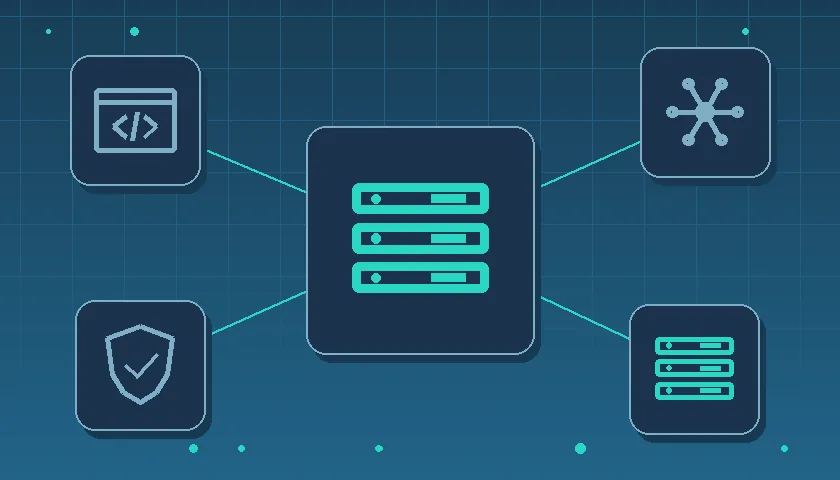
An office plans to store shared documents on a multi-drive NAS and wants to avoid business interruption after a drive failure. RAID can improve availability for certain disk failures, but it is not a substitute for backup. This is a useful situation in which to make the technical requirements explicit before changing tools, because the choices affect day-to-day work as well as the initial setup.
Availability and durability solve different problems. A system that remains accessible after a disk failure may still propagate an accidental deletion or lose data during a serious equipment failure. Retained copies and tested restoration provide a different type of protection. Decide how quickly important files must become accessible and how much recent change the owner can afford to lose.
Mirroring
RAID 1 stores copies on multiple drives, trading usable capacity for redundancy.
For mirroring, a useful comparison is one that a colleague can independently reproduce. Calculate usable capacity from two equal disks in a mirror. Describe the relevant starting conditions and save the result using consistent terminology. Avoid comparing a first-time setup in one system with an already optimized setup in another unless the difference is explicitly part of the evaluation. Make note of the effort required to reach a usable state as well as the eventual result. In a business environment, the time required to repeat a configuration, recover access or diagnose a problem is a real constraint, even when it is not reflected in a product specification.
Avoid building the rest of the project around an undocumented assumption. The useful output here is a small record of the actual behavior and any constraints that may affect the next decision. If another person cannot interpret that record, add the missing context while it is still easy to recover.
Striping
RAID 0 combines capacity and performance without drive redundancy; other RAID levels combine striping with parity.
An implementation plan should state who owns striping once the work is complete. Distinguish sequential throughput from recovery behavior after a simulated storage interruption. Ask the person responsible for ongoing administration to take part in verifying the result, rather than handing them an unfamiliar setup at the end. They need to know where to find the relevant configuration, what a normal result looks like and what to do if it changes unexpectedly. Where two roles share responsibility, document the handoff. In a small organization, clear ownership and a repeatable check often prevent problems that an additional piece of software would merely make more difficult to investigate.
It is worth writing down any restriction discovered during the check, including one that does not affect the present workload. A future maintainer may not have the same assumptions about data size, supported devices or how often the procedure needs to run.
Rebuild
Replacing a failed drive triggers recovery work and may stress remaining disks; performance can degrade during rebuilding.
Two 4 TB drives in a simple mirror provide approximately the capacity of one 4 TB drive before formatting and other overheads. They do not provide eight usable terabytes. The second copy improves availability after certain drive failures; it does not establish a separate historical copy of the files.
A written requirement is most valuable when it can be tested without guessing what the author meant. Check the replacement disk and recovery instructions for the actual array type. Establish a meaningful threshold for the result, whether that is correctness, usable response time, preservation of records or successful access by the intended person. Do not silently revise the threshold after seeing a disappointing outcome; instead, decide whether the business requirement itself has changed. Even a modest record of test results helps a small team make later decisions about rebuild without relying on a recollection of which option looked most convincing during the initial evaluation.
When comparing choices, include the ordinary maintenance procedure as a requirement. If the team can only demonstrate a capability with extensive assistance, plan for that dependency rather than assuming the same results will be available without it.
For another perspective on the same infrastructure or workflow decision, see How Object Storage Differs from File and Block Storage. Compare the requirements it identifies with the constraints in your own environment.
Failure
An array cannot prevent accidental deletion, theft, filesystem corruption or controller problems.
The concern is not whether all possible features are enabled. It is whether a specific need is satisfied consistently. Restore a representative file from a separated backup. If possible, repeat it after a normal restart, reconnection or change of user session appropriate to the system. Notice which behavior is preserved automatically and which must be configured again. This is a useful way to establish how failure will affect maintenance, particularly when the same setup has to be reproduced on another device or in another environment. A useful test produces enough detail to explain the result and identify the next action.
Record a failure before changing several settings at once. A clear observation made under known conditions makes troubleshooting much easier. With multiple simultaneous changes, it may become difficult to tell which action corrected the issue or whether it merely hid the symptom.
Recovery
Use monitored storage, configure alerts and maintain independent, tested backups.
A demonstration can be misleading when it uses a perfectly prepared environment. The useful question is what happens during routine work. Verify that disk-health notifications reach an owner who can act. Use an ordinary sample, with enough variation to reveal common problems but without requiring live customer records. Where behavior differs between a new environment and the existing one, establish which difference matters to the business before making a choice. Keep a record of errors and unexpected constraints as well as successes. An inconclusive test is a reason to refine the experiment, not a reason to assume that recovery has been solved.
If the exercise requires temporary privileges or a special configuration, separate those from what the finished system actually needs. Remove temporary access when it is no longer required and document the configuration that the team expects to keep.
Putting the findings to work
Storage devices and network services have different maintenance lifecycles. Disks, controllers and local applications may continue functioning after a vendor stops supporting a remote service. Avoid relying on unsupported remote access for current business operations, and keep an independently accessible copy of irreplaceable material. A migration plan should preserve the files even if the previous application cannot be installed again.
For a short review before making the decision, return to the concrete checks from the guide:
- Calculate usable capacity from two equal disks in a mirror.
- Distinguish sequential throughput from recovery behavior after a simulated storage interruption.
- Check the replacement disk and recovery instructions for the actual array type.
- Restore a representative file from a separated backup.
- Verify that disk-health notifications reach an owner who can act.
RAID can improve availability for certain disk failures, but it is not a substitute for backup. Keep the key observations available to the people responsible for the system, with enough detail to revisit the decision when the workload, tools or business requirements change.
Related guide: Ethernet Cabling and Network Speed Basics. Plan wired connectivity using supported speeds, cable quality and practical testing.
Related guide: Public Cloud vs Private Cloud vs Hybrid Cloud. Understand which deployment model suits workloads, compliance and operational resources.