Project Management Tools for Distributed Teams
Choose boards, task views and reporting based on collaboration patterns.
A remote development team shares tasks with designers and external partners in multiple time zones. The best tool makes the work easier to coordinate, with fewer separate status meetings. This is a useful situation in which to make the technical requirements explicit before changing tools, because the choices affect day-to-day work as well as the initial setup.
The licensing bill is only one element of operational cost. People spend time mapping incoming records, maintaining templates, resolving synchronization issues and training colleagues. Those recurring tasks should be visible during evaluation. A modest subscription that eliminates a significant manual step can be better value than a feature-rich alternative that requires additional administration.
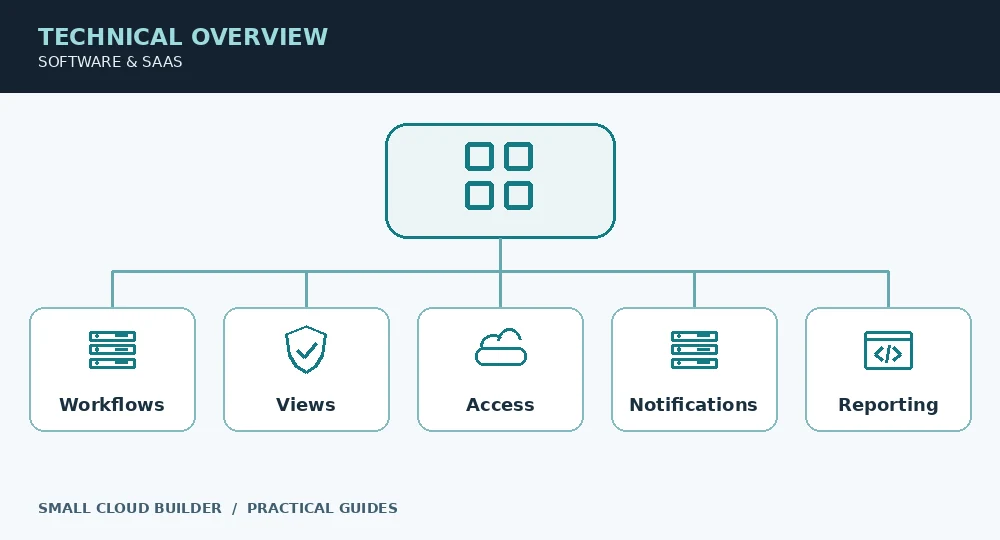
Workflows
Agree on status meaning, ownership and how urgent work enters the queue.
Separate the initial selection from the evidence that supports it. Trace a cross-team project with an explicit dependency and an owner. The test should be small enough that a mistake is reversible and sufficiently representative that the result can guide a decision. Record what direct observation establishes and what remains an assumption. For example, one successful run says little about unusual inputs or a much higher level of demand. Use the first observation to decide what another test ought to cover. As work moves from evaluation into routine operation, revisit the assumptions about workflows rather than leaving them frozen in the original proposal.
The cost of an incorrect assumption increases as more people or records depend on it. Resolve uncertainty while the configuration is still small. A precise limitation is more useful than a general assurance that the system should probably work in a larger environment.
Views
Boards help visualize flow; timelines reveal dependencies; task lists suit individual planning.
Keep a distinction between normal operation and an unusual condition. Check whether a blocked task becomes visible to the person able to resolve it. Observe the ordinary result first, then use a controlled test environment to examine a reasonable edge case. The purpose is to understand the limitations, not to create a problem for live users. If the result cannot be reproduced, inspect the starting state and any dependencies before drawing a conclusion. The practical understanding of views should include both what happens when everything is working and how an operator can tell when the system has stopped meeting its intended requirement.
There is no need for a large spreadsheet if a short set of observations is sufficient. The purpose is to make the decision traceable, distinguish known limitations from speculation and preserve enough information to investigate a reported problem later.
Access
Give contractors only the project information they require and maintain ownership after contracts end.
A design task blocked by an unapproved specification should remain visible to the person responsible for that approval. A separate board for each team can hide this relationship unless dependencies and owners cross the boundary. The reporting method should reveal waiting time and handoffs rather than rewarding movement of cards.
Separate the initial selection from the evidence that supports it. Verify a contractor can see only their assigned project area. The test should be small enough that a mistake is reversible and sufficiently representative that the result can guide a decision. Record what direct observation establishes and what remains an assumption. For example, one successful run says little about unusual inputs or a much higher level of demand. Use the first observation to decide what another test ought to cover. As work moves from evaluation into routine operation, revisit the assumptions about access rather than leaving them frozen in the original proposal.
Before extending the setup, identify the part that is hardest to reverse. A limited pilot lets the team address problems in that part without affecting unrelated work. Keep the dependable existing process available until the replacement has passed the checks that matter.
For another perspective on the same infrastructure or workflow decision, see Business Password Managers: Choosing and Deploying One. Compare the requirements it identifies with the constraints in your own environment.
Notifications
Reduce nonessential alerts and use written handoff notes for asynchronous collaboration.
An implementation plan should state who owns notifications once the work is complete. Compare a written status handoff with the original meeting routine. Ask the person responsible for ongoing administration to take part in verifying the result, rather than handing them an unfamiliar setup at the end. They need to know where to find the relevant configuration, what a normal result looks like and what to do if it changes unexpectedly. Where two roles share responsibility, document the handoff. In a small organization, clear ownership and a repeatable check often prevent problems that an additional piece of software would merely make more difficult to investigate.
Treat a successful result as evidence for the particular situation that was tested. Changes to the environment can alter that behavior. A lightweight regression check after important changes makes it easier to identify when a previously dependable assumption no longer holds.
Reporting
Track blocked work and lead time rather than equating completed task count with value.
The distinction becomes easier to see with an explicit acceptance test. Measure the delay between task arrival and completion on representative work. Decide in advance which outcome would be a success. A measurement that looks impressive on its own may be irrelevant if the original task remains difficult or unreliable. Track failures alongside the successful result; a capability that works only when a particular person is present may be less useful than a slightly slower process anyone on the team can follow. The final choice should reflect the actual working requirements around reporting, including what the team can reasonably support after the initial installation.
Record a failure before changing several settings at once. A clear observation made under known conditions makes troubleshooting much easier. With multiple simultaneous changes, it may become difficult to tell which action corrected the issue or whether it merely hid the symptom.
Putting the findings to work
Hosted software can change independently of the customer's release schedule. Updated interfaces, revised plans and integration changes may affect familiar processes. Keep documentation and data ownership arrangements current, and avoid putting irreplaceable record access behind a personal account. Evaluate an exit process during a pilot, when it is relatively straightforward to discover missing export capabilities.
For a short review before making the decision, return to the concrete checks from the guide:
- Trace a cross-team project with an explicit dependency and an owner.
- Check whether a blocked task becomes visible to the person able to resolve it.
- Verify a contractor can see only their assigned project area.
- Compare a written status handoff with the original meeting routine.
- Measure the delay between task arrival and completion on representative work.
The best tool makes the work easier to coordinate, with fewer separate status meetings. Keep the key observations available to the people responsible for the system, with enough detail to revisit the decision when the workload, tools or business requirements change.
Related guide: How Workflow Automation Tools Connect SaaS Applications. Design dependable integration flows with clear events, data mappings and error handling.
Related guide: Cloud Computing for Small Businesses: Where to Start. Choose the right first cloud services without inheriting a complicated infrastructure bill.