Skifta and DLNA Media Sharing: What the Experiment Taught
Explore the challenges behind early media placeshifting and networked playback.
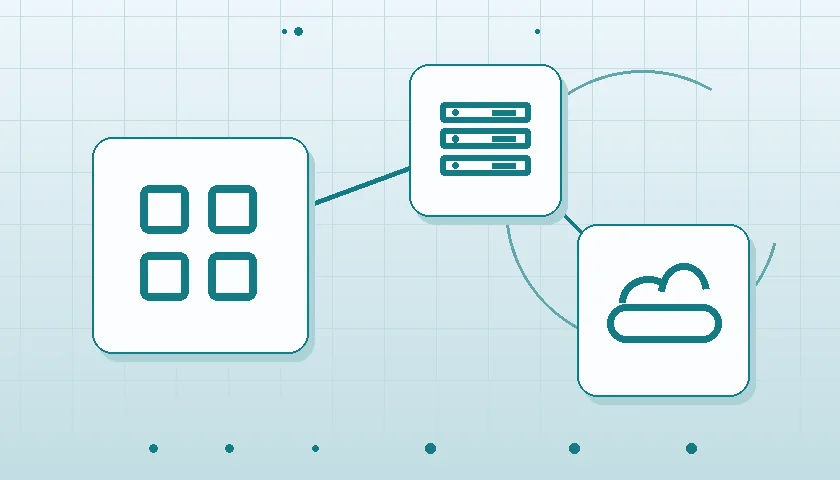
A technically curious household wanted a local media library to appear on devices outside its home without moving the original files. Skifta is a historical example of promising discovery technology constrained by networking, formats and setup complexity. The details matter more than product labels. The challenge is to understand which parts of the system the business depends on, where the limits are and how to check the proposed approach under realistic conditions.
Software advertised by a vendor is not necessarily the same as the configuration a business will use. Plan limits, administrator roles, supported integrations and export functions may differ. Test important workflows with representative but non-sensitive data before making the software central to the organization. Note who will own the subscription and how shared records survive changes in personnel.
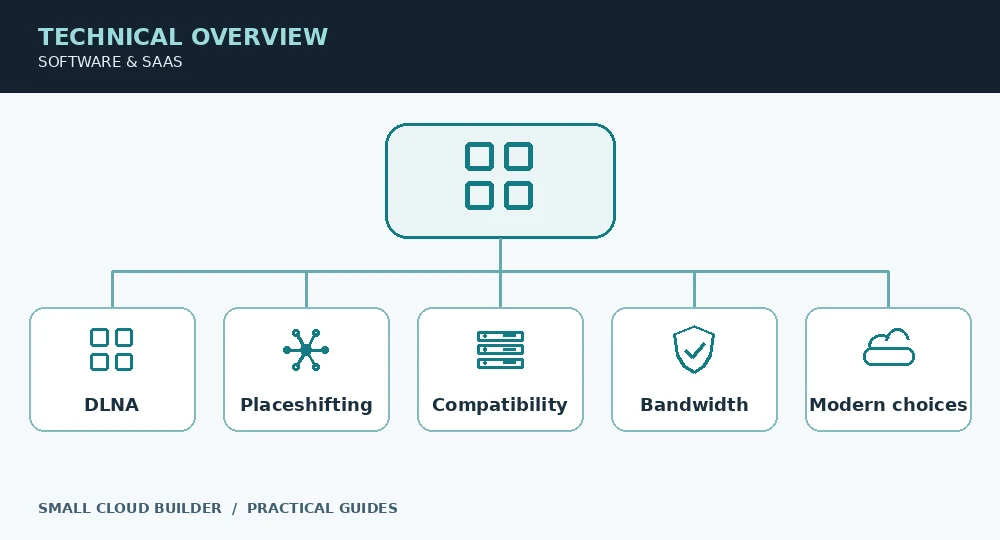
DLNA
Local media sharing separates the server that exposes items from clients that discover and play them.
Start with what is already observable. Draw a distinction between the media source, discovery service and playback client. Write down the result alongside the original expectation. A useful comparison keeps the workload and the surrounding conditions stable; differences in sample size, connection quality or a change made elsewhere in the system can otherwise distort the conclusion. The value of this check is not that it proves the entire design. It exposes whether the assumption about dlna holds under a recognizable working condition, and whether somebody has enough information to repeat the observation later without reconstructing the whole experiment from memory.
Treat a successful result as evidence for the particular situation that was tested. Changes to the environment can alter that behavior. A lightweight regression check after important changes makes it easier to identify when a previously dependable assumption no longer holds.
Placeshifting
Skifta attempted to make an existing library reachable in another location rather than acting as a complete online media store.
A successful catalog discovery tells a player where content is, but not whether it will decode that content. High-bit-rate video may work on the home network and fail on a slower remote connection. A service can relay access without performing the format conversion needed by the receiving device.
The distinction becomes easier to see with an explicit acceptance test. Compare local playback that works with an unsupported remote playback format. Decide in advance which outcome would be a success. A measurement that looks impressive on its own may be irrelevant if the original task remains difficult or unreliable. Track failures alongside the successful result; a capability that works only when a particular person is present may be less useful than a slightly slower process anyone on the team can follow. The final choice should reflect the actual working requirements around placeshifting, including what the team can reasonably support after the initial installation.
Avoid building the rest of the project around an undocumented assumption. The useful output here is a small record of the actual behavior and any constraints that may affect the next decision. If another person cannot interpret that record, add the missing context while it is still easy to recover.
Compatibility
Discovery and access do not ensure the receiver supports the source's codecs or resolution.
There is a straightforward way to turn compatibility into a decision instead of an argument about features. Calculate the approximate bandwidth of a sample media stream. Keep the result in a short working note: the starting conditions, what was changed, what actually happened and the outcome that would be acceptable in production. If the result is different from the expected behavior, isolate the cause before adding another component. This is particularly important for a small team, where the person implementing a solution is often also the person who will have to maintain it and explain a failure to colleagues.
The cost of an incorrect assumption increases as more people or records depend on it. Resolve uncertainty while the configuration is still small. A precise limitation is more useful than a general assurance that the system should probably work in a larger environment.
For another perspective on the same infrastructure or workflow decision, see Building an Internal Knowledge Base with SaaS. Compare the requirements it identifies with the constraints in your own environment.
Bandwidth
Without transcoding, the required bitrate can exceed a remote connection's capacity; startup and rebuffering reveal the mismatch.
A less obvious part of bandwidth is the boundary between an individual task and the system around it. Identify which component would need to transcode the video. Check the environment before and after the exercise, making sure unrelated records or settings have not changed. Record any dependencies required for success and distinguish permanent requirements from one-time setup work. A process that depends on a temporary test account, a particular device or an undocumented configuration may need additional work before it is ready for normal use. Leave room in the plan for that discovery rather than committing to a launch date on the strength of a first successful attempt.
The people who carry out routine work may notice different problems from the person who set up the system. Include their observations, particularly repeated manual steps or confusing states. These details can dominate the long-term effort even when the underlying technology performs well.
Modern choices
Prefer actively maintained remote-access systems with documented authentication and format support; do not expose unsupported legacy software.
For modern choices, a useful comparison is one that a colleague can independently reproduce. Check maintenance and authentication requirements before adopting any replacement system. Describe the relevant starting conditions and save the result using consistent terminology. Avoid comparing a first-time setup in one system with an already optimized setup in another unless the difference is explicitly part of the evaluation. Make note of the effort required to reach a usable state as well as the eventual result. In a business environment, the time required to repeat a configuration, recover access or diagnose a problem is a real constraint, even when it is not reflected in a product specification.
If the exercise requires temporary privileges or a special configuration, separate those from what the finished system actually needs. Remove temporary access when it is no longer required and document the configuration that the team expects to keep.
Putting the findings to work
The licensing bill is only one element of operational cost. People spend time mapping incoming records, maintaining templates, resolving synchronization issues and training colleagues. Those recurring tasks should be visible during evaluation. A modest subscription that eliminates a significant manual step can be better value than a feature-rich alternative that requires additional administration.
For a short review before making the decision, return to the concrete checks from the guide:
- Draw a distinction between the media source, discovery service and playback client.
- Compare local playback that works with an unsupported remote playback format.
- Calculate the approximate bandwidth of a sample media stream.
- Identify which component would need to transcode the video.
- Check maintenance and authentication requirements before adopting any replacement system.
Skifta is a historical example of promising discovery technology constrained by networking, formats and setup complexity. Keep the key observations available to the people responsible for the system, with enough detail to revisit the decision when the workload, tools or business requirements change.
Related guide: How to Evaluate SaaS for a Small Business. Assess software subscriptions using workflows, access controls and real ownership costs.
Related guide: Home Media Servers: Formats, Clients and Storage. Organize personal media playback across devices without assuming every file can play everywhere.